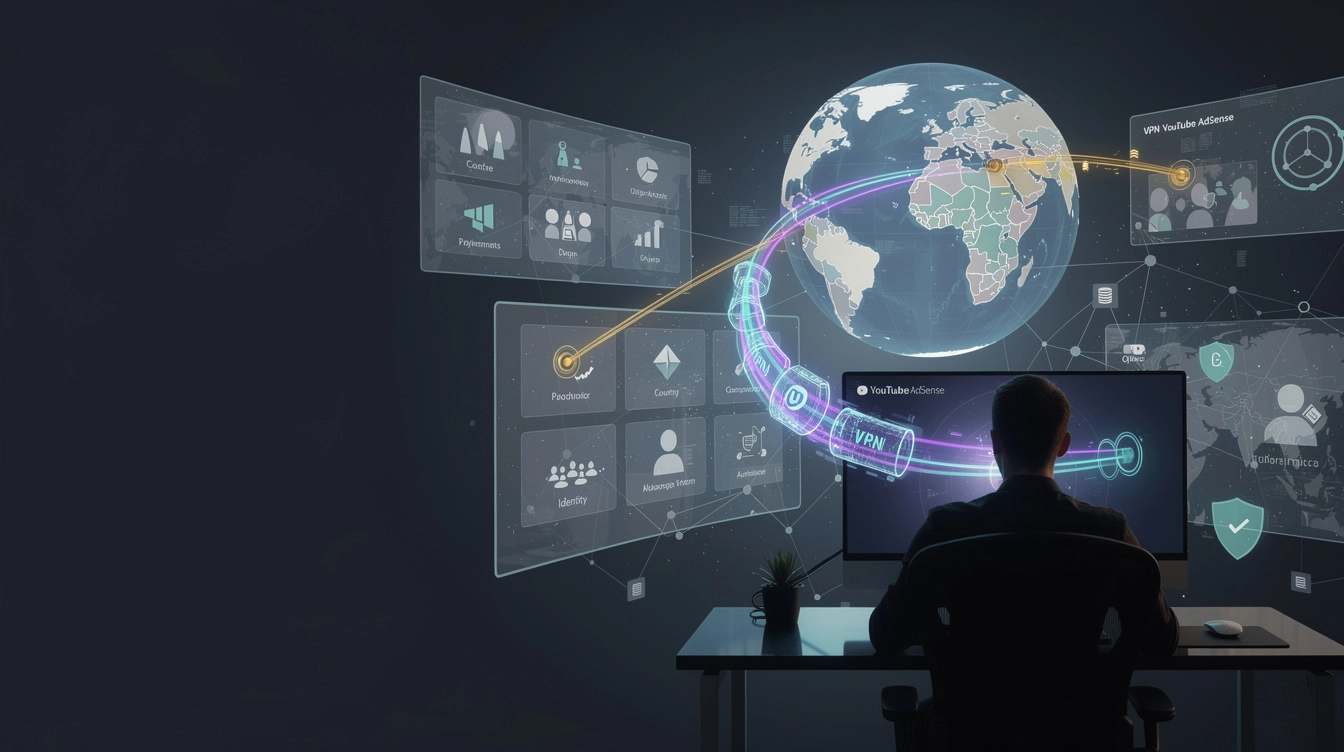
Posting from a VPN can help international creators reach a US audience, but a poor-quality IP can create unnecessary problems. Before you upload a TikTok, publish an Instagram Reel, or sign in to YouTube Studio, it is worth learning how to check if VPN IP is blacklisted and whether it has a reputation that could trigger extra verification or a shadowban.
What an IP Blacklist Means for Content Creators
An IP blacklist is a record or reputation system that identifies an IP address as suspicious, abusive, or associated with unwanted activity. An address may be flagged because of spam, automated requests, credential attacks, scraping, fraud attempts, or simply because too many unrelated users have shared it.
For creators, an IP reputation problem does not always result in an obvious “you are blocked” message. You may instead notice:
- Repeated login challenges or CAPTCHA requests
- Security alerts when switching between devices or locations
- Uploads that fail, stall, or require additional verification
- Features that temporarily disappear
- Sudden drops in reach after changing networks
- Accounts being asked to confirm identity more often
These symptoms do not prove that your VPN IP is blacklisted. Platform algorithms consider many signals, including account history, device information, login patterns, content, and behavior. Still, an IP with a poor reputation can add another risk factor, especially when you are managing several creator accounts.
A blacklist check is therefore a screening step, not a guarantee. A clean result means public reputation databases have not found a known issue; it does not mean TikTok, Instagram, or YouTube will automatically trust every session from that address.
How to Check if VPN IP Is Blacklisted
Start by confirming the public IP address your platform session is actually using. Visit a reputable IP-checking site and record the IPv4 address. If your VPN supports IPv6, check that too. An IPv6 leak can expose a different network than the one you intended to use.
Next, run the address through several reputation databases rather than relying on one result. Useful checks include:
- AbuseIPDB: Look for abuse reports, their age, and the reported categories. A single old report is different from frequent recent reports.
- Cisco Talos Intelligence: Review the address’s general reputation rating and whether it is associated with suspicious activity.
- Spamhaus or similar blocklist tools: Check whether the IP appears on a recognized DNS-based blocklist.
- IP reputation services: Some services identify hosting-provider, proxy, automation, or high-risk signals. Treat their scores as indicators, not final verdicts.
Read the details behind each result. A listing connected to malware or repeated brute-force attempts deserves more attention than a generic “datacenter IP” label. Datacenter classification alone does not mean an IP is unsafe, and many legitimate businesses and creators use datacenter connections.
Also check whether the IP is shared. Search the VPN provider’s documentation or ask support whether the address is dedicated to you, how many customers use it, and whether it changes regularly. You can also compare the IP shown in your VPN account with the address reported by an external checker after connecting.
Before posting, perform a small account-safety review:
- Connect to the VPN before opening the social platform.
- Close old sessions that may still be using another country or IP.
- Keep your device, browser, and time zone patterns reasonably consistent.
- Avoid logging in and out repeatedly while testing different servers.
- Do not use the same account from several countries within a short period.
- Confirm that DNS and WebRTC are not exposing a conflicting location in your browser.
If an IP appears on multiple serious blocklists, do not use it for an important upload or account-management session. Disconnect, document the result, and request a replacement or switch to another dedicated address.
Break out of your local algorithm
Get a clean US IP that TikTok and Instagram actually trust. Setup takes 60 seconds.
Why Shared VPN IPs Are More Likely to Be Blocked
Most consumer VPN servers put many customers behind the same public IP. That setup is convenient, but the reputation of the address depends on everyone using it. If one customer sends spam, runs automation, scrapes a platform, or triggers fraud systems, other users may inherit the consequences.
High-density shared IPs can also generate unusual traffic patterns. A platform may see dozens or hundreds of accounts signing in from one address, sometimes from different devices and countries. Even when your own behavior is legitimate, that crowding can make a normal login look less predictable.
Rapidly switching between shared servers creates another issue. If your account appears in New York, London, and Singapore within a short period, automated security systems may ask for confirmation or temporarily restrict actions. The problem is not always the VPN itself; it is the combination of an unfamiliar IP, a crowded address, and inconsistent session behavior.
For creators, consistency matters. Choose one suitable US location, connect before opening your creator tools, and keep that connection stable while uploading, moderating comments, or checking analytics. This will not override a platform’s policies, but it can reduce avoidable network-level friction.
How a Clean Dedicated US IP Can Reduce Posting Issues
A dedicated US IP is assigned to one customer instead of being shared across a large rotating pool. When that address is clean and low-density, it has less exposure to unrelated abuse and fewer competing accounts using the same network identity.
That can help reduce reputation-related login challenges, confusing location changes, and upload interruptions. It also gives you a more consistent US connection for audience research, creator dashboards, and publishing workflows. However, a dedicated IP is not a way to bypass platform rules or guarantee reach. You still need authentic account activity, policy-compliant content, strong account security, and sensible posting behavior.
Before choosing a provider, ask practical questions: Is the US IP dedicated? Does it remain stable? How is abuse monitored? Can support investigate a reputation issue? Are there enough locations and connection options for your workflow? The answers matter more than a long list of server locations.
VPN To US is built for creators who need that kind of consistency. It provides dedicated US IPs designed to be clean and low-density, helping international TikTok, Instagram, and YouTube creators avoid the reputation problems commonly associated with crowded VPN endpoints. It is a practical option if you want to protect your connection and keep your publishing routine focused on your content.
Looking for the simplest way to reach US audiences? VPN To US gives you a clean, consistent US IP in 60 seconds.
Final Checklist: Check if VPN IP Is Blacklisted Before Posting
Before an important upload, check the public IP, review it across more than one reputation database, confirm there are no serious abuse listings, and make sure your DNS, IPv6, and WebRTC settings are not revealing a conflicting connection. Then use one stable US location instead of jumping between crowded servers.
Knowing how to check if VPN IP is blacklisted helps you catch network problems before they affect a login or upload. Pair that check with a clean, low-density dedicated US IP and consistent account habits, and you can remove one more source of unnecessary friction from your creator workflow.